Behold the Crime of silence

In 1970, James Baldwin was interviewed by David Frost and was asked if he was a Christian or a Muslim, and he said, laughing, “I was born a Baptist.”

Baldwin laughed, hard, prompting Frost to say, “It’s not that funny.”

Candid Observations is a reader-supported publication. To receive new posts and support my work, consider becoming a free or paid subscriber.

Baldwin responded, “It is to me…and he proceeded to answer Frost’s next question, “And what are you now? Do you feel as black (sic) now as when you were born?”

Baldwin responded, “I think you should ask that question of our president…Richard Nixon or the Attorney General. Ask the president how black I feel.” Frost asked, “Do you think the Civil Rights movement is dead?”

Baldwin replied that the Civil Rights movement had resulted in some changes, yes, but it had always been a “self-contained” endeavor and carried within it “something self-defeating.” He added, “Martin knew this, too.”

“In the beginning, we thought that there was a way of reaching the conscience of the people in this country. We hoped there was, and I must say that we did reach several blacks and several whites. We did everything in our power to make the American people realize that the myths they were living with were not so much destroying black people as whites.”

He described who he was and how he felt as a Black person in a country that worshipped whiteness. It had taken its toll, and he said, “I am not a young man, but I am a Black American and I know something about the crime of silence. I know what happens in San Francisco and in Chicago, and in New York when one of our representatives wants to protect the morale of the police. I know what a no-knock, stop-and-frisk law means. It means search and destroy. I know something about the history black people have endured and are still enduring in this place.” He concluded this part of the interview by saying, “We’re not on the edge of a racial war. We’re on the edge of a civil war.”

Still.

Baldwin could just as easily have been sharing those thoughts today.

We are seeing what the crime of silence produces: Chaos. Complacency. Fear. Spiritual and societal blindness, caused by our refusal to challenge injustice and those who support it. The silence helps many rest in a false sense of security; “this is America,” they think. “Nothing as heinous as what happened in Germany will ever happen here.” The belief that America is truly exceptional and immune to abject suffering and destruction by any other country or from within has warped the minds and the capacity of people to understand that evil has no boundaries. It has made Americans boast of being “the greatest country in the world,” even as it descends into the abyss of tyranny. And it has made people think that if anyone suffers, ‘it won’t be them; it will be those who “deserve” to suffer.

Only some people who have a platform speak out and speak up. Unfortunately, too many others are caught in a mythic belief that even if things are bad, the great America will be able to rebound, and, many think, America will do so with the people whom they believed were never worthy of American rights and citizenship eliminated. They believe that if there is a breakdown of America, it will be for the good of a country that had for too long been sullied by the presence of people who should never have been here. (They forget that it was their ancestors who brought the “undesirables” to this country and that it was the unpaid labor of those people that resulted in the economic growth and domination of this country.)

Silence in the face of evil and injustice makes some people or groups of people think they are or will be immune to the dark days ahead, but it always results in excruciating suffering for the masses. American political and law enforcement leaders have been silent from this nation’s inception, and many have been complicit. This country has operated with the understanding that some people have the right to perpetuate injustice because of their race and wealth. They have operated with a “wink and a nod” mindset, akin to that portrayed in the movie, “Gentleman’s Agreement.” 

It was the silence (and fear of the president) by lawmakers in the halls of the United States Congress and Senate recently that resulted in the passage of a cruel budget that will hurt millions. Belief in the superiority of a rogue president has resulted in the US Supreme Court choosing to be silent at times when it should have been the leader of the “rule of law” and the pursuit of justice for everyone. Fear of so many, afraid of being punished by the powers that be, has resulted in silence about the complicity with and partnership of America with Zionists, as troops have ravaged the West Bank and specifically, Gaza using weapons that were supplied by the United States, and silence is the accepted way of ignoring the suffering that is going on in the Sudan.

The prayer is that none of us remain silent but take the risk of speaking out and acting to stop the march to the shores of 18th century injustice, echoing the voice of the God of the Christian Bible who desires mercy and not sacrifice and justice for all human beings, the God whose teachings clearly illustrate that He/She cannot be named as the commander-in-chief of those who are running over and destroying the lives of too many of the human beings She created.

If any of us are being silent, we need to think about why and decide if we are going to serve God or serve human beings and honor our desire to flourish in a capitalistic society. There indeed may not be a way to reach the consciences of those who practice injustice against others, but injustice will surely flourish if those who are writhing as they watch the destruction of liberty and justice for all God’s people remain silent.

That silence is perhaps the greatest crime that we are facing today.

A candid observation…
Can White Supremacy Be Cured?

The disease called white supremacy is as deadly to the soul and spirits of those afflicted as is a stage four cancer with metastasis.

Unlike cancer, however, white supremacy is contagious and affects everyone it touches. It is without rationality or compassion; it is willfully blind to the reality that those who claim intellectual superiority are simply wrong. It causes people to compromise the conception of God who presumably made everything and everyone intentionally, and it allows people to distance themselves from the putrid and toxic exudate which comes from the hearts and mouths of those who live by it.

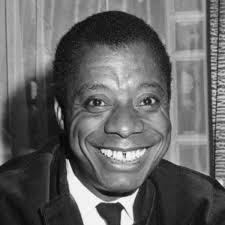
James Baldwin

White supremacists do not see people of color as human beings with emotions, needs and the right to dignity; they instead view people as objects. Their dehumanization of human beings is not reserved for only black people, but for brown people, for Jews, for Catholics, for women, and for the poor (whatever race the poor might be.

That’s just for starters.

White supremacy is a mindset which is most notably practiced by wealthy white men, but which is also supported by white people in general. It is a receptacle for racist thought, but also for sexist and Xenophobic and anti-Semitic thinking as well.  It is a way of life based on power and fear of losing that power. It spawns and provokes violence as a means of maintaining its power because the white supremacist believes that violence is proof of being strong.

White supremacists have lied to themselves for so long that they believe the lies. They feel completely justified in oppressing people who do not fit the mold of what they expect. White supremacy is about power, just as is rape.

Author and essayist James Baldwin bemoaned the seemingly hopeless plight of white supremacists. In an interview with David Frost in 1970, Baldwin pondered out loud if this country was on the verge of a civil war. The Civil Rights Movement had been all but decimated, and the gains made by black, brown and poor people were slowing being reversed. It was an act of abject hatred, a quality which white supremacists inhale and digest, presumably because doing so is the only way they can continue their oppression of others.

The Civil Rights Movement, observed Baldwin, “always contained within itself something self-defeating.” Black people, led by Dr. King, believed “at the beginning” of the movement that “there was a way of reaching the conscience of the people of this country.”

“We did everything in our power to make the American people realize that the myths they were living with were not so much destroying black people as whites,” he said.

White people, he said, “are much more victimized” than was he or black people in general, he said, adding, “it is terrible to watch a nation lose itself.” The country was not on the edge of a racial war, he said, but on the edge of a civil war.

Nothing much has changed.

Spurred by fear of losing their power, white supremacists, led by the current president, are on the prowl, joyfully grateful that the president is “on their side.” If, as Rev. Dr. William Barber says that the opposite of hatred is fear, then what we are seeing is fear unleashed, not caring who might be mowed down in the process of making America “great” again.

This nation was conceived in white supremacy. The Native Americans on whose land the whites from England descended had to “destroy the indigenous people in order to become a nation,” said Baldwin. We are still trying to become a nation and if the truth be told, we are not so interested in being “one nation under God.” In fact, our very diversity and pluralism have been major factors in stoking the fear of the white supremacists.

White supremacists will not admit it, but their wealth and power depend on – and have always depended on – the condition of the people whom they regularly oppress. Mass incarceration, voter suppression, poverty, the attack on social programs – are all tools white supremacists use to maintain their power. They are deathly afraid that their power is in jeopardy; hence, the rise from the underground of their hateful rhetoric and violent behavior – even as they criticize violence which comes from people trying to defend themselves from the attacks of white supremacists.

Baldwin said in 1970 that “for the first time the people legally white and the people legally black are beginning to understand that if they do not come together, they’re going to end up in the same gas oven.” White supremacy has taken root in the soul of America and it cannot be cured; it has gone untreated for too long,

The gas ovens stand ready to receive us – oppressed, yes, but oppressors even more. This sickness is only getting worse, and the outcome of white supremacists being driven by their hatred and fear is not going to be good for them. What goes around certainly comes around, and be sure, their behavior is “coming around.”

A candid observation …

Understanding “Shyness”


I have finally come to an understanding of what being “shy” is all about.

It is about low self-esteem and fear.

I am shy. I am animated when I present, when I preach, when I teach, but when my public performance is over, I am terrified of interacting with people. I am not good at it.

I am afraid to call meetings, even board meetings, because I am afraid of rejection.

I call it shy. It is worse than that.

I am fond of saying that there can be no reconciliation until there is truth- telling. Today, I am telling the truth.

I have never reached out to people. In therapy, I learned that because of my childhood, I learned to be isolated. It was safe. Where there is no interaction, there can be no rejection. My mother was gone …somewhere…and I lived with foster parents. My mother said my biological dad didn’t want me.

Cool. I stayed by myself. My only real connection was with my mother, who was gone somewhere and only came to Detroit, to the home of my foster family, intermittently.

I learned to be a loner.

My entire professional life, I have been a loner. Didn’t seek people out, people who did what I did, who could have helped me and with whom I could have had really good friendships.

I formed a board for Crazy Faith and have never called a meeting because I am afraid.

I have an urge to call for a vigil to address all the craziness that is going on in this country, but have not, because I am afraid. “Shy,” I call it, but it is really fear.

I had learned to be a loner.

As I raised my two children, I realized I had a problem and did see, thank goodness, that life is about relationships. I encouraged, pushed my children to make relationships, which they have done.

Score for me on that one.

But I, who call myself “shy,” who has a ministry called “crazy faith,” and who teaches that fear and faith cannot exist in the same sphere, the same space, live in fear. Fear of rejection, mostly.

Sharing this is scary, but necessary. I am determined to grow.

“Shy” is a misnomer. It is low self-esteem, based on fear of rejection, fear of not being good enough.

A candid observation…

The Disease Called Fear

Franklin Delano Roosevelt, 1933. Lietuvių: Fra...
Franklin Delano Roosevelt, 1933. Lietuvių: Franklinas Delanas Ruzveltas (Photo credit: Wikipedia)


It was Franklin Delano Roosevelt who said, in his first inaugural address, that “the only thing we have to fear …is fear itself.”


The year was 1932. The country was in bad shape economically, and by 1933, the depth of the depression had hit head on.  People were deathly afraid, and Roosevelt not only knew it, but he knew times would get worse before they got better. The things they worried about most, he said, were “only material things.”  Said he, in that inaugural speech: “In such a spirit on my part and on yours we face our common difficulties. They concern, thank God, only material things. Values have shrunken to fantastic levels; taxes have risen; our ability to pay has fallen; government of all kinds is faced by serious curtailment of income; the means of exchange are frozen in the currents of trade; the withered leaves of industrial enterprise lie on every side; farmers find no markets for their produce; the savings of many years in thousands of families are gone.”


He said that “happiness (didn’t lie) in the mere possession of money; it lies in the joy of achievement, the thrill of creative effort.”


Those were powerful words, a balm to the anguished citizens of the United States who were facing a horrible reality. A new normal. It was scary because all that Americans had come to know and love as “American” was being challenged and changed before their eyes…and they could not see where the changes would lead. Would they have their homes? Would they have a job? What would they eat? How would they eat? When was the nightmare going to end? FDR’s words were powerfully comforting, words I’m sure some people came back to again and again.


There is a lot of fear swirling around now. Hurricane Sandy has thrown people into pits of despair. The economy has had people carrying fear around like a heavy suitcase. Some people are afraid for the country if President Barack Obama wins, and others are terrified for the country if Gov. Romney wins. There is no peace in the land right now.


Why? Because the disease of fear is stalking. It is stalking our country, it is stalking individuals, and it is stalking with a sense of arrogance. Fear relies on control, and it manipulates people to much that they acquiesce and give in to being controlled. Joan Chittister‘s book, Scarred by Struggle, Transformed by Hope talks in depth about fear. She says that “fear paralyzes a person,” and keeps people from doing things they know they should do. It makes them afraid to even try, and in so doing, lose their peace of mind. Chittister says we as humans must ask ourselves, “What am I willing to lose in order to have peace of mind and integrity of soul?” She says that it’s “not the grappling with a thing that defeats us; it is the unknown answers to hidden questions that wear us down.”


Fear, she says, “cripples us more than any disease ever could. It takes eminent good sense and turns it to gelatin.” Finally, she says “oppressors do not get to be oppressors in a single sweep. They manage it, because little by little, we make them that. We overlook too much in the beginning and wonder why we lose control in the end.”


I wonder what the world would be like if people were not so susceptible to fear. I remember a friend of mine in seminary, who said that his father hated racism but was afraid to speak out about it because he was afraid his church would fire him. I think how people have been intimidated into not speaking up when they’ve known they should, because they were afraid of the consequences. I am sure that, in light of Hurricane Sandy, there are some people who know that there are some predatory companies out, ready to suck the life blood out of vulnerable people, but will not say anything because they are afraid. I think much of the police brutality we hear about comes about because white officers are afraid of African-American males, not because the police officers are bad people. Young women who get caught up in life on the streets stay there far longer than they want because they are afraid of the pimps who initially lured them into “the life” with material things and the young girls translated “gift-giving” with love. Some people honestly think that the Palestinians are getting a raw deal in Israel, but they are afraid to say anything for fear of being called anti-Semitic.We have all heard stories about neighbors who suspected that a wife or children were being abused, but didn’t say anything because they were afraid. We have probably all seen something that we knew was wrong but have been afraid to say something because we don’t know what our “courage” will mean for our lives   Fear is like a mean overseer, stalking lives and countries and situations with a huge whip.


We are afraid of bettering ourselves, stepping out of comfort zones into an “unknown” and so we stay in situations that stunt our growth. We are afraid to move and afraid to stand still. It is no wonder that Thoreau said that many of us live “lives of quiet desperation.”


Chittister says that “moral maturity requires us to choose truth over self-preservation, whatever the cost.”  If we do not do that, as individuals or as communities, oppression and injustice gets to run its course, unopposed.


That’s what fear expects us to do: cower so that injustice can have its way. Sadly, fear is way too often the driver of the car, and it spreads its toxicity everywhere. Fear moves faith and hope out of the way. Fear will account for a lot of people making bad decisions in difficult times; it will add misery to people who are miserable enough.


At the end of the day, we have to decide whether we want to fuel fear and watch it metastasize throughout our spirits, robbing us of opportunities to be free, or if we finally want to face our Goliaths…whatever the cost.


Too often we leave Goliath standing upright, laughing at us.


But as long as Goliath stands, we cannot be free. And …we were made to be free.


A candid observation…